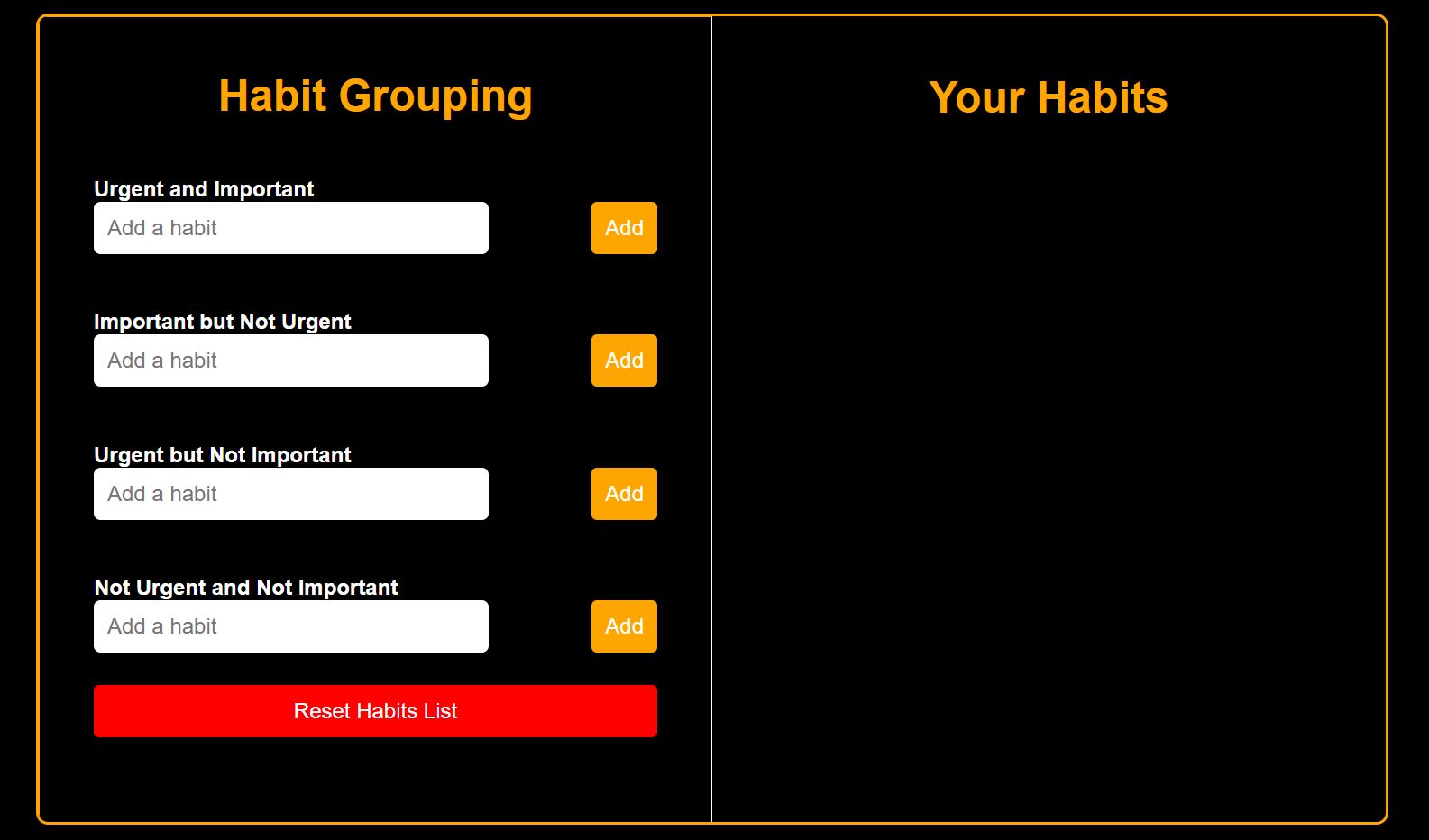
Many task management applications become cluttered over time, making it difficult for users to identify what deserves their attention first.
The approach
Habitual organizes tasks automatically using the Eisenhower Matrix while saving all user data locally so tasks remain available even after refreshing the browser.
Features
Task management
Automatic Eisenhower Matrix categorization
Local Storage persistence
Responsive design
Task editing
Task deletion
Engineering note
My introduction to application architecture
Habitual was one of the projects that taught me to think beyond individual functions and begin structuring applications as connected systems. I learned how to organize JavaScript into reusable modules, persist data using Local Storage and dynamically render different sections of the interface based on changing application state.
Challenges
Correctly categorizing tasks into their respective quadrants.
Keeping Local Storage synchronized with user actions.
Designing an interface that remained simple despite multiple task categories.
What I learned
Application architecture becomes increasingly important as projects grow.
Reusable code makes future improvements much easier.
Building products requires balancing technical implementation with user experience.